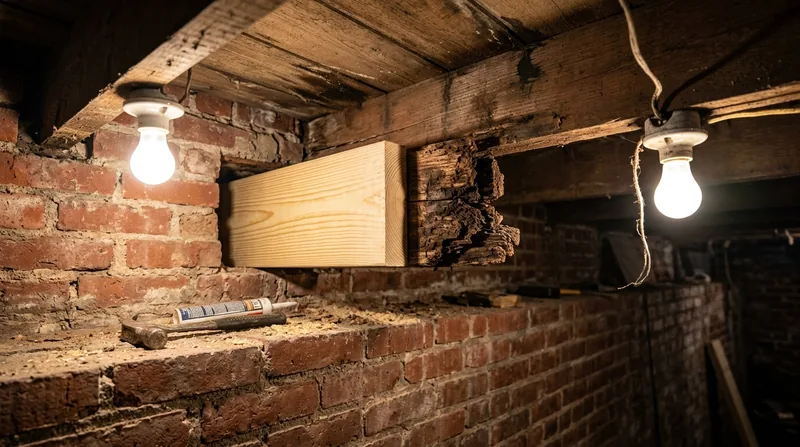




Floor Joist & Subfloor Repair in St. Louis addresses one of the most common structural problems in our older housing stock. St. Louis brick homes, from the Victorian mansions of Lafayette Square to the two-family flats of South City and the brick bungalows on The Hill, were built with wood framing that sits directly above grade or in damp basements. The combination of our humid continental climate, freeze-thaw winters, spring flooding from the Mississippi watershed, and the relentless moisture that comes with aging foundations creates ideal conditions for wood rot, soft joists, and sagging subfloors. When a floor feels bouncy, soft underfoot, or visibly dips, the cause is almost always compromised floor joists or subfloor sheathing. We repair or replace those members, level the floor, and restore the structural integrity that your home depends on. For a free estimate, call (314) 338-6837.
Why Floor Joist and Subfloor Damage Matters in St. Louis Older Homes
Floor joists and subfloor are the first line of defense against moisture and gravity. In St. Louis homes built before 1960, these members were typically milled from Douglas fir or oak and sit in direct contact with rim joists and sill plates that often rest on limestone or brick foundations without modern moisture barriers. Water seeping from basement walls, condensation from summer humidity, and standing water after heavy rains penetrate the wood from below. Once rot begins, it spreads along the grain and across members, weakening the entire floor system. A soft spot that seems minor today becomes a structural liability within years, affecting not just comfort but the integrity of walls and finishes above.
- Soft or spongy wood in joists or subfloor indicates active rot and requires replacement or reinforcement to prevent further collapse.
- Bouncy or uneven floors signal that joists have lost strength and need sistering, jacking, and leveling before new subfloor and finishes go down.
- Termite damage (identified from a professional pest inspection) requires removal of the affected wood and replacement with pressure-treated or naturally rot-resistant stock.
- Water staining, black mold growth, or a musty smell in crawlspaces and basements warn that moisture control and joist repair need to happen together.
- Sagging or tilting floors in corner rooms often point to failed sill plates or rim joists that need to be sistered or replaced in sections.
Addressing these problems early keeps repair costs manageable and prevents damage from spreading to beams, walls, and finishes above.
Local context: St. Louis sits in a humid continental zone with an average annual rainfall of 40 inches and spring thunderstorm activity that can saturate basements and crawlspaces. Freeze-thaw cycles in winter expand cracks in foundation mortar and allow capillary moisture to rise into wood framing. Homeowners in Soulard, Tower Grove, and Benton Park often discover joist rot during basement finishing or after a heavy rain reveals soft spots in the floor above. Early detection and repair prevent expensive structural failure later.
For more information on wood damage and repair options, see our wood rot and dry rot repair service page.
How We Repair and Replace Floor Joists and Subfloor in St. Louis Homes
Our process begins with a careful inspection to identify which members are damaged, how far the rot has spread, and whether repair or replacement is the right answer. We document the damage, assess moisture sources, and explain what needs to happen. If joists are sound but the subfloor is compromised, we replace just the subfloor sheathing. If joists show rot or weakness, we either sister new lumber alongside the damaged member or remove and replace the joist entirely. We then jack and level the floor before installing new subfloor, ensuring a solid, flat surface for finishes to follow.
- We inspect all accessible joists, rim joists, and sill plates with a moisture meter and probe to identify soft wood and assess the extent of rot.
- We remove damaged subfloor sheathing and set aside any flooring or finishes that can be salvaged and reinstalled after the structural work is complete.
- We sister new joists alongside compromised members using full-length bolting and nailing, or we remove and replace the joist if rot is too extensive.
- We install pressure-treated rim joists and sill plates in areas exposed to moisture, and we use naturally rot-resistant species like redwood or Douglas fir for interior joists where appropriate.
- We jack the floor level using temporary posts and beams, then install new subfloor sheathing and fasten it securely to all joists.
- We address moisture sources, such as improving drainage, venting crawlspaces, or sealing foundation cracks, to prevent recurrence.
The result is a solid, level floor that will support finishes and the home's structure for decades to come.
Example from the field: A 1920s brick bungalow in Creve Coeur had a sagging kitchen floor and soft joists along the basement wall. We sistered new Douglas fir joists to the damaged members, jacked the floor level, removed and replaced the rim joist and sill plate with pressure-treated lumber, and installed new subfloor. The homeowner then had the flooring refinished and the kitchen cabinets reset. Total time in-house: 5 working days. The floor is now solid and level.
Learn more about our structural carpentry approach on our framing and structural carpentry page.
| Approach | Description | Best for |
|---|---|---|
| Sistering | Installing a new joist alongside a damaged one, bolting and nailing the two members together to share the load. | Joists with moderate rot or settling that are still structurally sound enough to be reinforced. |
| Full Joist Replacement | Removing a joist that is severely rotted or structurally compromised and installing a new joist of the same dimension and grade. | Joists with extensive rot, termite damage, or failure that cannot safely carry load even with reinforcement. |
| Subfloor Replacement | Removing damaged subfloor sheathing and installing new plywood or OSB fastened securely to all supporting joists. | Soft, rotted, or water-damaged subfloor where the joists themselves are still sound. |
| Jacking and Leveling | Using temporary posts, beams, and hydraulic jacks to lift a sagging floor back to level or near-level before structural repairs and new subfloor are installed. | Floors that have settled or sagged due to joist settlement, rot, or inadequate support, when returning to level is feasible. |
| Rim Joist and Sill Plate Repair | Replacing sections of rim joists or sill plates that are rotted or damaged, using pressure-treated lumber to resist future moisture damage. | Perimeter joists and plates that sit in contact with foundation walls and are exposed to capillary moisture and condensation. |
Floor Joist and Subfloor Repair Cost in St. Louis: What to Expect
The cost of floor joist and subfloor repair in St. Louis ranges from $1,800 for small, localized subfloor replacement to $8,000 or more for extensive joist replacement, jacking, and moisture remediation across a large area. The primary factors that affect cost are the number and length of joists that need sistering or replacement, the size of the subfloor area being replaced, whether the floor needs to be jacked level, and the accessibility of the work. A single sistered joist with new subfloor in a small room costs less than replacing multiple joists across an entire first floor or basement rim. Moisture control work, such as improving drainage or venting crawlspaces, may add to the scope. We recommend getting 2 to 3 estimates from local contractors so you can compare approaches and pricing. See our full pricing guide for more detail on how we structure estimates.
Factors that move cost upward include the extent of rot (repair versus replacement), the number of joists affected, access difficulty (tight crawlspaces or finished basements require more labor), and the need to jack and level the floor. Pressure-treated lumber and rot-resistant species cost more than standard framing stock but last longer in damp conditions. If termite damage is involved, the work is documented from your pest inspection report, and we replace the damaged wood with appropriate stock. Permits are often required for structural work that alters load-bearing members, and the St. Louis Building Division should be consulted before work begins.
Hiring a Carpenter for Floor Joist and Subfloor Repair Near Me: What to Look For
When you are looking for a contractor to handle floor joist and subfloor repair near St. Louis, focus on three things: experience with structural carpentry in older homes, willingness to explain the damage and the repair method clearly, and full insurance coverage. A good contractor will tell you whether a joist can be repaired or needs replacement, and why. They will walk you through the process, discuss moisture control, and explain what permits may be needed. Ask for references from recent projects in similar St. Louis homes, particularly in neighborhoods like Lafayette Square, Soulard, or Tower Grove where older brick construction is common. Check that the contractor is fully insured and ask to see proof of coverage. If the work involves altering a load-bearing wall or removing a beam, confirm that a licensed structural engineer has reviewed the design and that the St. Louis Building Division has issued a permit. For free estimates and to discuss your specific floor problem, call (314) 338-6837 or visit our contact page.
- Verify that the contractor carries liability insurance and worker's compensation insurance, and ask for a certificate of insurance before work begins.
- Request references from at least two recent joist or subfloor repair projects in St. Louis, and follow up with those homeowners about the quality of work and the contractor's professionalism.
- Confirm that the contractor understands the difference between repair and replacement, and that they will explain why each joist or section of subfloor is being addressed the way it is.
- Ask whether permits are needed for the scope of work and whether the contractor will handle permit applications and inspections or if that is the homeowner's responsibility.
- Get a written estimate that breaks down labor, materials, and any additional costs such as jacking, moisture work, or travel, so there are no surprises when the invoice arrives.
A local carpenter who has worked on St. Louis brick homes understands the specific challenges of our climate, our building stock, and our moisture issues. That knowledge is worth the investment in the right contractor.
Floor Joist & Subfloor Repair in St. Louis: Pricing Guide
| Service | Price | Details |
|---|---|---|
| Single joist sistering with subfloor patch | Starting at $1,800 | One joist reinforced with sistering, new subfloor in that bay, jacking and leveling included, up to 100 sq ft |
| Multiple joist replacement and subfloor | Starting at $4,500 | Two to four joists fully replaced, new subfloor across the affected area, jacking, leveling, and pressure-treated rim joist work |
| Extensive floor system repair with moisture control | Starting at $7,000 | Multiple joists and rim joists replaced, large subfloor area, jacking and leveling, drainage or ventilation work to address moisture source |
| Crawlspace or basement access challenges | On estimate | Tight spaces, finished ceilings, or complex layouts require on-site inspection to assess labor and staging before pricing |
| Travel and site preparation | Included | No additional mileage or travel fee within St. Louis and surrounding service areas; site prep and debris removal included in estimate |
| Free estimate | No obligation | Call (314) 338-6837 for same-day or next-day appointment; we document damage and explain repair options before you commit |
Indicative pricing, the exact cost depends on square footage, finish, and site access. Free personalized estimate within 24h at (314) 338-6837.


