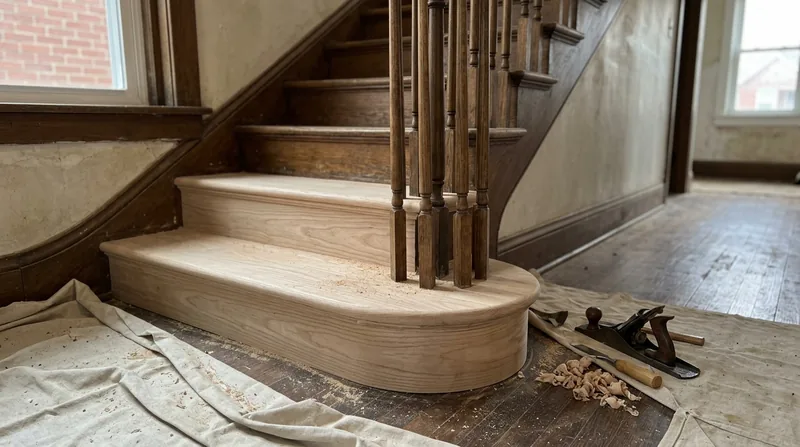




St. Louis staircases are climbed thousands of times a year, and the freeze-thaw winters, humid summers, and termite pressure of the Mississippi River valley take a real toll on treads, stringers, and railings. Whether your home is a brick Victorian in Lafayette Square, a craftsman bungalow on The Hill, a Central West End townhome near Forest Park, or a South City flat in Soulard, stair and railing repair is often the difference between a safe, solid climb and a squeaky, loose, or unsafe staircase. We repair and rebuild interior and exterior stairs, restore period railings to code, install handrails, and replace damaged stringers and balusters without unnecessary replacement. Since 2016, we have worked on the staircases of St. Louis homes, understanding both the wood species and construction methods that define the city's residential stock.
Why Stair and Railing Repair Matters in St. Louis Homes
Staircases in St. Louis homes see constant use and constant moisture stress. Winter freeze-thaw cycles expand and contract wood stringers and treads, causing nails to back out and joints to loosen. Humid summers and spring basement seepage can rot stringers at their base, especially in older homes where sill plates meet floor joists. Termite activity during the warm months can hollow out balusters and newel posts from the inside out, leaving them structurally compromised but visually intact. A loose or squeaky staircase is not just annoying, it is a safety issue and a sign that repair is needed now, before wood damage spreads or a family member is injured.
- Squeaky treads indicate loose fasteners or movement in the stringer, and we re-fasten or replace the hardware to restore stability.
- Worn or cupped treads lose their grip and can be resurfaced or replaced depending on the wood condition and the staircase age.
- Loose balusters and newel posts are a code violation and a fall hazard, and we re-glue, re-nail, or replace them as needed.
- Rotted or termite-damaged stringers undermine the entire staircase structure, and we repair or replace the affected wood with matching species.
- Loose or missing handrails do not meet current safety codes, and we install or upgrade them to meet St. Louis building standards.
- Cracked or split treads and risers compromise both safety and the appearance of the staircase, and we repair or replace the damaged boards.
A well-maintained staircase is safer, quieter, and adds real value to your home. We start by diagnosing the root cause of the problem, not just the symptom.
Key info: St. Louis staircases are often built with oak or Douglas fir stringers and treads, materials that respond well to repair and refinishing. If the wood is sound, we repair it. If it is rotted or termite-damaged, we replace the affected sections with matching wood and restore the staircase to safe, code-compliant condition. Exterior stairs and porches are especially vulnerable to moisture and freeze-thaw damage, and we inspect them annually in spring to catch problems early.
For more on structural wood damage, see our wood rot repair service and termite damage repair pages.
How We Repair and Rebuild Stairs in St. Louis
Every staircase is different, and so is every repair. We start with a detailed inspection, identifying loose fasteners, wood damage, code violations, and structural issues. Then we develop a repair plan that makes sense for the age and condition of your home. For a squeaky stair, that might be re-fastening a loose tread. For a rotted stringer, that might be sistering in new framing or replacing the stringer entirely. For an old railing that no longer meets code, we restore it or install a new one that matches the style of your home.
- We inspect the staircase from top to bottom, testing each tread, baluster, and fastener for movement, rot, or damage.
- We identify the root cause of the problem: loose nails, moisture intrusion, wood rot, termite damage, or structural failure.
- We propose a repair plan that restores safety and function without unnecessary replacement, and we discuss permits if structural changes are needed.
- We remove damaged treads, risers, stringers, or balusters and replace them with matching wood, or we re-fasten and reinforce existing wood if repair is sound.
- We test the repaired staircase for safety, stability, and code compliance, and we sand and finish the wood to match the existing staircase.
- We clean up and explain what we did and why, so you understand the repair and can maintain the staircase going forward.
The goal is a safe, solid, quiet staircase that lasts. We work on interior stairs in Victorian mansions in Lafayette Square, craftsman homes on The Hill, and modern townhomes in Webster Groves and Kirkwood, as well as exterior stairs and porches throughout St. Louis.
Local example: A Soulard rowhouse had a loose basement stair with a rotted bottom stringer. We sistered a new pressure-treated beam alongside the damaged wood, re-fastened the treads, and installed a new handrail to code. The staircase is now solid and safe, and the homeowner avoided a full replacement. The same repair approach works for exterior stairs and porches that have been damaged by freeze-thaw cycles or moisture.
See our framing and structural carpentry service for more on sistering and structural repairs.
Stair and Railing Repair Methods and Materials
| Approach | Description | Best for |
|---|---|---|
| Fastening and reinforcement | Re-nail or screw loose treads, risers, and balusters; add blocking or cross-bracing where needed to eliminate movement. | Squeaky stairs, loose balusters, minor structural movement in otherwise sound wood. |
| Tread and riser replacement | Remove and replace individual treads or risers with matching wood; sand and finish to blend with existing staircase. | Cupped, cracked, worn, or rotted treads; cosmetic and functional restoration of interior stairs. |
| Stringer repair and sistering | Reinforce a damaged or rotted stringer by sistering in new framing alongside it, or replace the stringer entirely with matching wood. | Rotted stringers, termite damage, structural failure, freeze-thaw damage to basement or exterior stairs. |
| Baluster and newel post replacement | Remove and replace individual balusters or newel posts; match the original profile and finish for period-correct restoration. | Termite-damaged or rotted balusters, loose or missing newel posts, code compliance for handrails and safety. |
| Handrail installation and upgrade | Install new handrails to meet current St. Louis building codes; match existing railings or provide modern safety-compliant alternatives. | Missing or non-compliant handrails, exterior stairs, accessibility upgrades, safety improvements for aging in place. |
Material choice depends on the staircase location and use. Interior stairs are typically oak or Douglas fir, finished to match the existing wood. Exterior stairs and porches are often rebuilt with pressure-treated lumber or redwood where moisture exposure is high. We source wood to match the original species and grain whenever possible, so the repair blends seamlessly with the existing staircase.
Stair and Railing Repair Cost in St. Louis: What to Expect
The cost of stair and railing repair in St. Louis depends on the scope of the damage, the size and complexity of the staircase, and whether the repair is structural or cosmetic. A simple re-fastening of a squeaky tread might start at around $600, while a full stringer replacement or extensive baluster work could range much higher. The best way to understand the cost for your home is to get a free, no-obligation estimate from us so we can see the staircase, diagnose the problem, and give you a realistic price.
Several factors move the cost up or down. A staircase with rot or termite damage in the stringers will cost more than one with just loose fasteners. An exterior staircase exposed to weather and freeze-thaw cycles may need more extensive repair or replacement than an interior stair. Access to the staircase matters too: a basement stair in a tight space takes longer than a grand central staircase. And if your repair involves a structural change, such as replacing a load-bearing stringer or altering the staircase layout, you may need a permit from the St. Louis Building Division, which adds time and cost but ensures the work is safe and code-compliant.
We always provide a detailed estimate before we start work, and we explain what each part of the repair costs and why. If you want a ballpark range before calling, visit our pricing page for more detail on common repair scenarios. The most honest answer is to call us at (314) 338-6837 or request a free estimate online, so we can look at your staircase and give you a number you can count on.
Stair and Railing Repair Near Me: What St. Louis Homeowners Should Know When Hiring a Carpenter
Finding a good carpenter for stair and railing repair in St. Louis means looking for someone who understands the local building stock, knows the codes, and has the skill to match old wood and restore period details. Before you hire, check that the contractor is fully insured and carries a current City of St. Louis Construction Industry Contractor License. Ask for references from recent stair repair jobs in your neighborhood, and call at least two of them to ask whether the work was done on time, on budget, and whether the staircase is holding up well. Get estimates from at least two contractors so you can compare price and approach, and do not hire the cheapest bid without understanding what it includes.
If your staircase repair involves a structural change, such as removing or replacing a load-bearing stringer or altering the staircase opening, check with the St. Louis Building Division to confirm whether a permit is required. Some homeowners associations in Clayton, Kirkwood, Ladue, and other St. Louis suburbs have design guidelines for railings and handrails, so verify any restrictions before you start. And if your home is a historic property in a protected district such as Lafayette Square or Compton Heights, ask whether the repair requires approval from the city's Historic Preservation Office. A good local carpenter will know these rules and help you navigate them.
We are fully insured and hold a City of St. Louis Construction Industry Contractor License. We have been repairing staircases in St. Louis since 2016, and we work in neighborhoods throughout the city and suburbs. If you are ready to get your staircase inspected and repaired, contact us for a free estimate at (314) 338-6837. We respond within 24 hours and will walk you through the repair process step by step.
Stair & Railing Repair in St. Louis: Pricing Guide
| Service | Price | Details |
|---|---|---|
| Tread re-fastening and minor repairs | Starting at $600 | Includes inspection, re-nailing loose treads, tightening balusters, and minor reinforcement to restore stability and eliminate squeaks |
| Single tread or riser replacement | Starting at $800 | Removal and replacement of one tread or riser with matching wood species, sanding, and finish to blend with existing staircase |
| Stringer repair or sistering | Starting at $1,200 | Structural reinforcement or partial replacement of a damaged stringer with pressure-treated or matching hardwood, including fastening and finishing |
| Full staircase restoration or replacement | On estimate | Complete rebuild of treads, risers, stringers, balusters, or handrails; requires on-site inspection to assess wood condition and structural needs |
| Handrail installation or upgrade | Starting at $400 | Installation of new handrails to meet St. Louis building code requirements; price varies by material, length, and complexity of mounting |
| Free estimate and 24-hour response | No charge | Inspection, diagnosis, and written estimate with no obligation to book; call (314) 338-6837 or request online |
Indicative pricing, the exact cost depends on square footage, finish, and site access. Free personalized estimate within 24h at (314) 338-6837.


