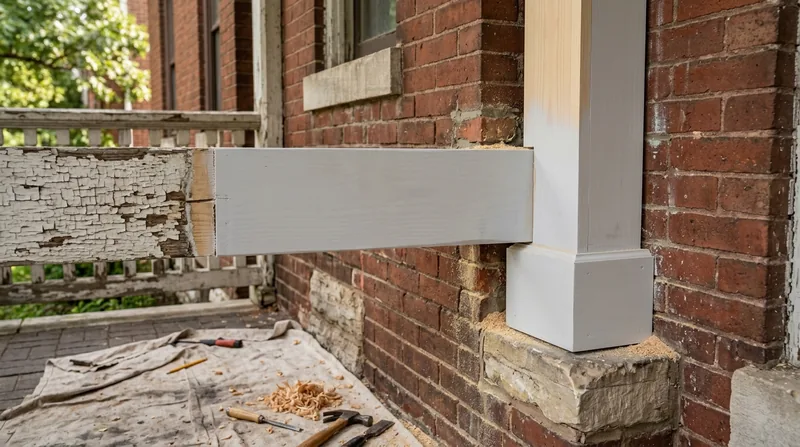




St. Louis is a brick city. For over a century, local clay deposits made brick the default material for exterior walls across Lafayette Square, South City rowhouses, brick bungalows on The Hill, and Central West End townhomes. Wood shows up where it matters most: interior framing, floor joists, window frames, porch framing, deck structure, trim, and fascia. Wood rot and dry rot repair in St. Louis addresses the damage that humidity, freeze-thaw cycles, and the occasional termite pressure inflict on these wooden structural and finish elements. The humid continental climate, with cold winters and hot summers, creates ideal conditions for wood decay to advance. We cut out the compromised wood, install sound framing or trim in its place, and explain what caused the failure so you can prevent it next time.
Why Wood Rot and Dry Rot Repair Matters in St. Louis Homes
Wood rot develops when moisture penetrates sound wood and fungi begin breaking down the cellulose. Dry rot is a specific form of fungal decay that can advance rapidly through framing once it takes hold. In St. Louis, the culprits are typically poor drainage, failed caulking around windows, undersized gutters on brick facades, roof leaks channeling water into soffits and fascia, or ground moisture wicking up through sill plates and rim joists. Unlike cosmetic damage, wood rot weakens the structural integrity of framing, subfloors, and load-bearing elements over months or years. Catching it early and removing the decayed wood, then replacing it with sound lumber, stops the spread and restores strength.
- Inspect basement rim joists and sill plates annually, especially after heavy spring rains or snowmelt.
- Check window casings and door jambs for soft spots, paint failure, or dark staining that signal trapped moisture.
- Look under eaves and along fascia boards for wood that feels spongy or crumbles when probed with a screwdriver.
- Have a pest inspector evaluate any signs of termite activity, which can accelerate wood decay and may require separate treatment.
Early detection and repair prevent small rot pockets from becoming major structural replacements down the road.
Key info: St. Louis brick homes built before 1950 often have wood-frame porches, window sills, and basement joists that were never treated for moisture. These are the first places rot appears. A homeowner in Clayton or Webster Groves might discover soft wood along a basement rim joist after a heavy rain; in Maplewood or Soulard, it's often window casings and exterior trim on 100-year-old rowhouses.
For more context on structural wood damage, see our page on Termite Damage Repair, which addresses wood that has been compromised by pest activity.
How We Repair Wood Rot and Dry Rot in St. Louis
Our approach is straightforward: we identify the extent of the decay, remove all compromised wood back to sound framing or trim, address the moisture source that allowed rot to develop, and install new lumber sized and species-appropriate for the application. We do not use chemical treatments or fumigation. Instead, we work from your pest inspection report if termites are involved, repair and replace the damaged wood, and leave you with a durable solution. For structural repairs involving floor joists, beams, or load-bearing walls, we often recommend a consultation with a licensed structural engineer to ensure proper sizing and compliance with local building codes.
- We inspect the affected area, probe the extent of decay with a screwdriver or awl, and determine whether repair or full replacement is the honest answer.
- We remove all decayed wood, cutting back to solid framing or trim.
- We treat exposed sound wood with a borate-based preservative to inhibit future fungal growth.
- We install new lumber, matching the species and dimension of the original (Douglas fir, redwood, or pressure-treated lumber depending on the location and exposure).
- For finish work, we match stain and paint to blend with existing trim and maintain the home's appearance.
The entire process takes one to three days for a localized rot repair, longer if the damage is extensive or involves structural framing.
Local example: A homeowner in Kirkwood noticed dark, soft wood along the bottom of a basement window frame. We removed the rotted casing, found the sill plate underneath was sound but the wood immediately adjacent was compromised. We cut out the rot, treated the perimeter, installed new pressure-treated lumber for the sill extension, and installed new exterior casing with proper slope to shed water. The repair cost under $1,200 and took one day. Without repair, the rot would have advanced into the structural framing within 18 months.
For more on structural framing repairs, visit our Floor Joist & Subfloor Repair page.
Repair Methods and When We Use Each
| Approach | Description | Best for |
|---|---|---|
| Localized removal and replacement | Cut out the decayed wood, treat the surrounding sound wood, install new lumber matched to the original. | Window casings, door frames, fascia boards, small sections of rim joist or sill plate. |
| Sistering | Install a new structural member alongside a compromised joist or beam, fastened securely to distribute load. | Floor joists with rot confined to one side; rim joists or band boards where partial decay allows reinforcement. |
| Full member replacement | Remove the entire joist, beam, or structural element and install new lumber to the same dimension and grade. | Widespread rot affecting more than 30 percent of a joist, or decay in a critical load-bearing element. |
| Moisture remediation | Repair gutters, improve drainage, seal cracks in foundation, or improve ventilation to eliminate the source of moisture. | All rot repairs, to prevent recurrence. Often done in concert with wood removal and replacement. |
Wood Rot and Dry Rot Repair Cost in St. Louis: What to Expect
The cost of wood rot repair in St. Louis ranges from $650 for a small, localized repair (such as a rotted window casing or short section of fascia) to several thousand dollars for structural work involving floor joists, rim joists, or load-bearing walls. The primary factors that affect price are the location and accessibility of the rot, the size of the affected area, the species and dimension of lumber required for replacement, and whether the repair involves structural framing that may require an engineer's assessment and a building permit.
A typical basement rim joist repair, where decay is limited to a 3- to 4-foot section and sound framing remains on either side, runs $1,200 to $2,500. A full floor joist replacement or sistering operation costs more, depending on how many joists are affected and whether the subfloor must be removed to access them. Exterior trim repairs (window casings, door frames, fascia) usually fall between $650 and $1,800 per repair. Moisture remediation, such as gutter repair or foundation sealing, may be necessary to prevent rot from returning and is often factored into the overall cost.
We recommend getting estimates from two or three carpenters so you can compare approach and price. Be specific about the location and extent of the damage when requesting an estimate, and ask whether the contractor recommends repair or replacement. Visit our pricing page for a detailed breakdown of typical repair costs in St. Louis and the surrounding areas.
What to Look for When Hiring a Wood Rot Repair Contractor Near St. Louis
Finding a skilled carpenter in St. Louis or nearby suburbs like Clayton, Kirkwood, Ladue, or Webster Groves comes down to a few key factors. Look for a contractor who is fully insured and holds a current City of St. Louis Construction Industry Contractor License (or equivalent for your municipality). Ask for references from recent jobs, and follow up with at least one or two homeowners to learn about their experience. Request a detailed, written estimate that spells out what will be removed, what will be replaced, what materials will be used, and what the timeline will be.
If the repair involves structural framing, ask whether the contractor recommends a licensed structural engineer's assessment and a building permit. The St. Louis Building Division sets thresholds for when permits are required, and it is worth verifying before work begins. If your home is in a historic district like Lafayette Square or Compton Heights, check whether there are architectural review requirements before replacing exterior wood. Some homeowners associations in areas like Ladue or Creve Coeur may have specific guidelines for exterior repairs as well.
Get in touch with us for a free, no-obligation estimate. Call (314) 338-6837 or visit our contact page to request an inspection. We respond within 24 hours and can often schedule a site visit within a few days.
Wood Rot & Dry Rot Repair in St. Louis: Pricing Guide
| Service | Price | Details |
|---|---|---|
| Small localized rot repair | Starting at $650 | Window casing, door frame, or short fascia section; includes removal, treatment, and new lumber installation |
| Basement rim joist or sill plate repair | Starting at $1,200 | Limited decay in 3 to 4 feet of rim joist; includes removal, borate treatment, and pressure-treated replacement lumber |
| Floor joist sistering or replacement | Starting at $2,500 | Single joist repair with new member installed alongside or full joist replacement; cost depends on joist count and subfloor access |
| Large structural repair or multiple members | On estimate | Extensive rot across multiple joists, beams, or load-bearing walls; requires on-site assessment and may need structural engineer input |
| Travel and scheduling | Included | No separate mileage or call-out fee within St. Louis and surrounding service areas; free initial estimate within 24 hours |
Indicative pricing, the exact cost depends on square footage, finish, and site access. Free personalized estimate within 24h at (314) 338-6837.


