Dry Rot vs Termite Damage: The Critical Differences
If you've noticed soft, crumbling wood in your St. Louis home, you're facing one of two common culprits: dry rot or termite damage. While both can cause serious structural problems, they require completely different treatment approaches. Understanding the difference between these two wood-destroying forces is the first step toward protecting your home and your wallet.
Dry rot and termite damage might look similar to an untrained eye, but they originate from entirely different sources. Dry rot is a fungal decay that thrives in moist, poorly ventilated areas, while termites are wood-eating insects that actively tunnel through timber. The confusion is understandable, but the consequences of misidentifying the problem can be costly. Treating dry rot like termite damage, or vice versa, means you'll miss the root cause and watch the problem spread. That's why getting a professional assessment early matters so much for homeowners in Clayton, Webster Groves, and throughout the St. Louis area.
What Does Wood Rot Look Like? Identifying Dry Rot Damage
Dry rot presents itself with some distinctive visual and tactile clues. The affected wood typically appears dark brown and becomes extremely brittle, often cracking in a distinctive cubic or brick-like pattern. If you press on wood affected by dry rot, it will crumble or collapse under light pressure, leaving a powdery residue on your fingertips. The wood loses its structural integrity from the inside out, sometimes leaving a thin outer shell that looks deceptively sound until you touch it.
One of the hallmark signs of dry rot is the presence of mycelium, a white or grayish cotton-like growth that spreads across the wood surface and nearby materials. You might also notice a musty, earthy smell in the affected area, which indicates active fungal growth. Dry rot thrives in damp conditions with poor air circulation, so it commonly appears in basements, crawl spaces, around plumbing leaks, and in areas where water damage has occurred. The fungus can spread rapidly through structural members, which is why Wood Rot & Dry Rot Repair should be addressed as soon as you notice the early warning signs.
Signs of Termite Damage in Wood: What Termites Leave Behind
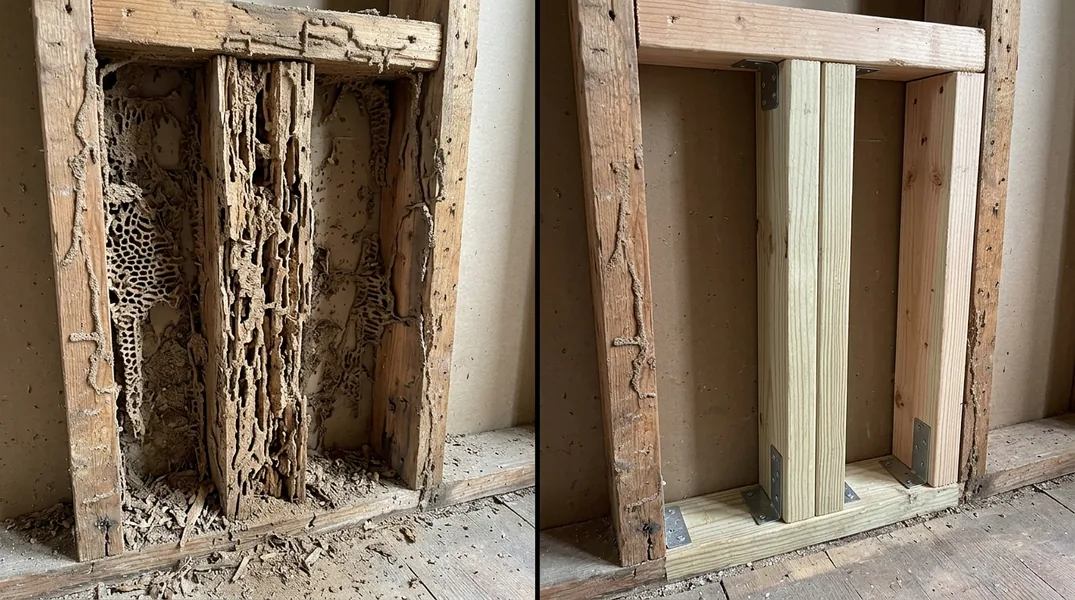
Termite damage tells a very different story than dry rot. While dry rot crumbles and powders, termite-damaged wood often appears hollowed out with a honeycomb-like internal structure. Termites eat wood from the inside out, following the grain and leaving behind thin shells of wood that may still look relatively intact on the surface. When you tap on termite-damaged wood, it sounds hollow. If you can easily push a knife or screwdriver through the wood, you're likely looking at active or past termite infestation.
Unlike dry rot's cubic cracking pattern, termite damage creates galleries or tunnels that follow the wood grain. You might find mud tubes on foundation walls or wooden supports, which termites construct to travel safely between their nest and food source. These tubes are made from soil, saliva, and feces, and they're a clear red flag. Other signs include discarded wings near windows or doors, small piles of sawdust-like droppings called frass, and in some cases, audible clicking or rustling sounds coming from within the walls. Termite Damage Repair requires immediate attention because termite colonies can cause extensive damage over months or years if left untreated.
How Moisture and Environment Play a Role in Both Problems
While dry rot and termite damage are distinct problems, they often thrive in similar environments. Both love moisture. Dry rot is a fungus that literally cannot survive without high humidity levels and water sources. Termites, while they don't eat water, are attracted to damp wood because it's softer and easier to consume. This means a home with water intrusion, poor drainage, or high humidity is vulnerable to both threats simultaneously, which complicates diagnosis and treatment.
In the St. Louis region, the humid summers and spring rains create ideal conditions for both wood rot and termite activity. Basements and crawl spaces are particularly vulnerable, especially if they're not properly waterproofed or ventilated. Leaking gutters, cracked foundations, and poor grading around your home's perimeter all contribute to moisture problems that invite both fungal decay and termite infestations. The best defense is controlling moisture: fix leaks promptly, ensure proper drainage, maintain gutters, and improve ventilation in damp areas. If you're unsure about the moisture levels in your home's critical areas, a professional inspection can reveal problems before they become expensive structural issues.
When to Call a Professional for Wood Damage Assessment Near Me
If you've spotted soft wood, strange smells, mud tubes, or any of the warning signs mentioned above, it's time to call a professional. Trying to diagnose the problem yourself is risky because misidentification leads to ineffective treatment. A trained carpenter or pest specialist can examine the damage patterns, test the wood's integrity, look for supporting evidence like mud tubes or fungal growth, and determine exactly what you're dealing with. They can also assess how far the damage has spread and what structural components are affected.
St Louis Carpentry specializes in identifying and repairing both wood rot and termite damage throughout the St. Louis area. Our team can evaluate your situation with a thorough inspection and provide you with a clear diagnosis and repair plan. Whether you need Floor Joist & Subfloor Repair, Beam Replacement & Load-Bearing Wall Removal, or comprehensive rot remediation, we have the expertise to handle it. Don't wait for the problem to worsen. Contact St Louis Carpentry today at (314) 338-6837 or visit our website to request a free estimate.
Wood Rot & Dry Rot Repair Cost in St. Louis: What to Budget
The cost of repairing wood rot or termite damage varies widely depending on the extent of the problem, the structural components involved, and the materials needed. A small, localized area of dry rot might cost a few hundred dollars to repair, while extensive rot affecting floor joists, beams, or load-bearing walls can run into the thousands. Termite damage repair costs similarly depend on how deeply the infestation has penetrated and how many structural elements require replacement or reinforcement.
The key to managing costs is catching the problem early. Small repairs are always cheaper than major structural restoration. That's another reason professional inspection matters. When you get a free estimate from St Louis Carpentry, we'll provide a transparent breakdown of what needs to be done and what it will cost. We understand that homeowners want to know what they're facing financially, so we're upfront about pricing and scope of work. Don't let fear of the unknown keep you from addressing wood damage. A consultation costs nothing, and the information you gain could save you tens of thousands of dollars in preventable structural damage down the road.
Looking for a professional carpentry contractor in St. Louis? St Louis Carpentry responds fast for all your carpentry needs.
Get a Free QuoteOur services: Wood Rot & Dry Rot Repair · Termite Damage Repair · Floor Joist & Subfloor Repair