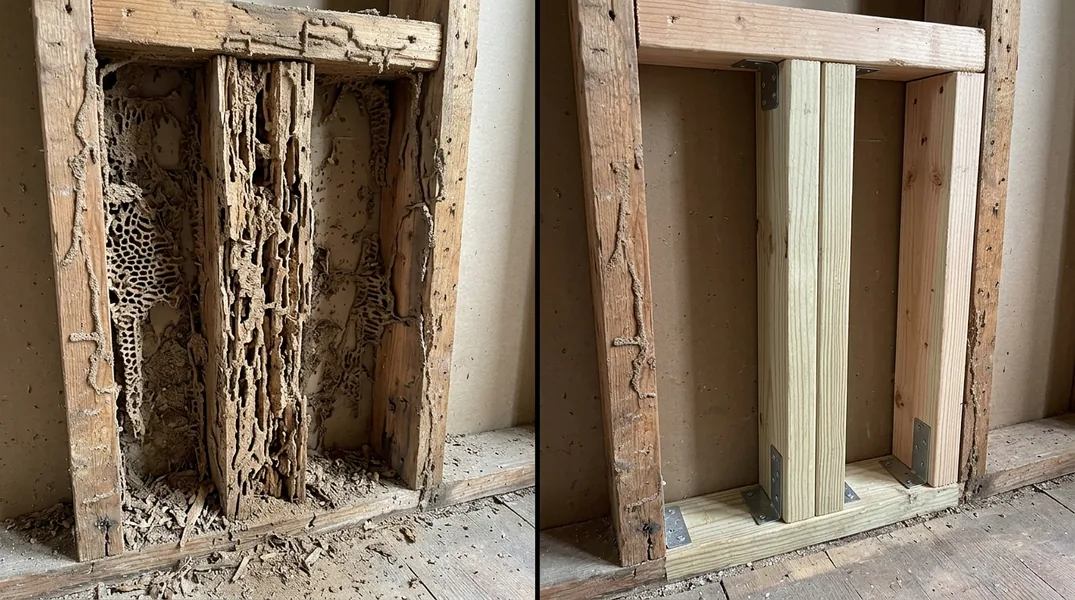
The Hard Truth: Why Wood Rot and Termite Damage Aren't Covered
When you discover wood rot or termite damage in your home, one of your first instincts might be to file a homeowners insurance claim. Unfortunately, most standard homeowners insurance policies will deny coverage for both wood rot and termite damage. This isn't a surprise to insurance companies; it's by design. Insurance policies are written to cover sudden, accidental damage from external events like storms or fires, not gradual deterioration caused by moisture, pests, or lack of maintenance.
The reason is straightforward: insurance companies view wood rot and termite infestations as preventable problems. Wood rot develops over time due to moisture exposure, which homeowners can theoretically control through proper maintenance, drainage, and ventilation. Termites, similarly, are considered an ongoing pest issue that should be managed through regular inspections and preventative treatments. Because these problems develop gradually rather than occurring suddenly, insurers classify them as maintenance failures rather than insurable losses.
If you're a homeowner in St. Louis, this means you'll likely need to pay out of pocket for Wood Rot & Dry Rot Repair or Termite Damage Repair. The good news is that addressing these issues early can prevent far more expensive structural damage down the line.
Understanding Your Homeowners Insurance Policy Language
To understand why your claim might be denied, it helps to know what your insurance policy actually says. Most homeowners insurance policies include an exclusion clause specifically mentioning wood rot, dry rot, and termite damage. These exclusions are not hidden in fine print; they're standard across nearly every major insurance carrier in the United States. When you read the policy's list of exclusions, you'll typically see language stating that damage caused by insects, rodents, birds, or other animals is not covered, and that damage from rot, mold, or fungus is excluded as well.
However, there are rare exceptions to this rule. If termites or wood rot damage occurs as a direct result of a covered peril, you might have a claim. For example, if a severe storm damages your roof and causes a leak that leads to wood rot, the damage might be covered under the storm damage portion of your policy. Similarly, if termites enter your home through a wall damaged by fire, the resulting termite damage might be partially covered. The key word is 'might' because these situations require careful documentation and often involve disputes with your insurance company.
Before filing any claim related to wood damage in Clayton, Webster Groves, or other St. Louis neighborhoods, review your policy carefully or contact your insurance agent to ask specifically about wood rot and termite coverage. Don't assume your policy excludes these issues; verify it directly.
What Happens If You Wait: The Real Cost of Ignoring Wood Rot and Termites
Many homeowners delay addressing wood rot or termite damage because they're hoping insurance will cover it or they're trying to save money in the short term. This approach almost always backfires. Wood rot and termite damage spread progressively, and what starts as a small problem in one joist or beam can compromise entire structural systems within months or years. Termites, in particular, work silently and can cause catastrophic damage before you even realize they're present.
If you ignore wood rot in your Floor Joist & Subfloor Repair areas, the rot will eventually spread to load-bearing beams and posts. Once structural integrity is compromised, you're looking at major reconstruction costs that far exceed what early repair would have cost. Similarly, a termite colony left unchecked can hollow out wooden framing members, making your home unsafe to live in. In severe cases, you might need Beam Replacement & Load-Bearing Wall Removal, which is exponentially more expensive than catching the problem early.
The financial impact extends beyond just repair costs. Unresolved wood rot or termite damage will show up during a home inspection if you ever try to sell your property. Buyers and their lenders will demand that all damage be repaired before closing, and you'll have less negotiating power than if you'd addressed the issue proactively. In some cases, severe damage can make a home unmortgageable or unsellable at any reasonable price.
Wood Rot & Dry Rot Repair Cost in St. Louis: What to Budget
Since insurance won't cover wood rot or termite damage, understanding the pricing for repairs is essential for budgeting. The cost of wood rot repair varies dramatically depending on the extent of the damage, the location of the rot, and the type of wood involved. A small area of surface rot on a deck might cost a few hundred dollars to address, while structural rot affecting multiple floor joists or beams could run into the thousands.
Several factors influence repair costs. First, the accessibility of the damaged wood matters. If rot is in a crawl space or attic, it's often easier and cheaper to address than rot in a finished basement or interior wall. Second, the type of repair needed determines cost. Simple rot removal and wood replacement is less expensive than repairs that require temporary structural support or reinforcement of surrounding framing. Third, the size and depth of the affected area directly correlates with labor and material costs. A professional carpenter must remove all rotted wood and replace it with sound material, often requiring additional bracing or reinforcement.
Termite damage repair can be equally variable in cost. Beyond the structural repairs needed to address the damage itself, you'll also need to invest in professional termite treatment to eliminate the colony and prevent future infestations. This might include soil treatments, bait systems, or wood treatments. When budgeting for termite damage in your home, factor in both the structural repairs and the ongoing pest management costs. If you're unsure what you're facing, St Louis Carpentry can provide a free estimate after a thorough inspection. Call (314) 338-6837 to schedule yours.
When to Call a Professional: Wood Rot & Dry Rot Repair Near Me
Knowing when to call a professional is crucial for preventing small problems from becoming catastrophic ones. If you notice soft, spongy wood anywhere in your home, visible wood rot, a musty smell in your basement or crawl space, or any signs of termite activity, you should have a professional inspection as soon as possible. Don't wait for the damage to worsen or for insurance to magically cover it. The sooner you act, the more affordable and effective your repairs will be.
A qualified carpenter can assess the extent of damage, determine whether it's just surface-level or has compromised structural integrity, and recommend the most cost-effective repair strategy. In University City and throughout the St. Louis area, many homeowners try DIY repairs on wood rot, which often leads to incomplete removal of damaged wood or improper replacement. This can create bigger problems down the line. Professional repair ensures that all compromised wood is removed and properly replaced, and that the underlying cause of the rot (usually moisture) is addressed to prevent recurrence.
For termite damage specifically, professional assessment is even more critical. Termites can cause damage in hidden locations that an untrained eye won't spot. A professional inspection will identify all affected areas and help you coordinate both structural repair and pest control treatment. St Louis Carpentry specializes in both wood rot and termite damage assessment and repair, ensuring your home is safe and sound for years to come.
Protecting Your Home: Prevention and Insurance Strategy
While you can't rely on homeowners insurance to cover wood rot or termite damage once it occurs, you can take proactive steps to prevent these problems and protect your investment. Proper maintenance is your first line of defense. Keep gutters clean and functioning properly to direct water away from your foundation and wooden structures. Ensure your home has adequate ventilation in attics and crawl spaces to prevent moisture buildup. Inspect your home's exterior regularly for signs of water intrusion, and address any roof leaks or foundation cracks immediately.
For termite prevention, have your home inspected by a pest control professional annually, especially if you live in an area prone to termite activity. Many pest control companies offer preventative treatment plans that cost far less than treating an active infestation and repairing the damage it causes. Additionally, maintain clear space between soil and wood framing around your home's foundation, and remove any dead wood or wood debris from your property.
From an insurance perspective, document your preventative maintenance efforts. Keep receipts for gutter cleaning, roof repairs, foundation sealing, and pest control treatments. This documentation protects you in two ways: it demonstrates to your insurance company that you're maintaining your home responsibly (which can support your case if you ever need to dispute a denial), and it provides a clear record of your efforts to prevent the exact problems that insurance won't cover. If you need help with repairs or want a professional assessment of your home's condition, contact St Louis Carpentry at (314) 338-6837 or request a free estimate today.
Looking for a professional carpentry contractor in St. Louis? St Louis Carpentry responds fast for all your carpentry needs.
Get a Free QuoteOur services: Wood Rot & Dry Rot Repair · Termite Damage Repair · Floor Joist & Subfloor Repair