Why Is My Floor Sagging? Common Causes in Older St. Louis Homes
If you've noticed your hardwood floors dipping or sloping in your older St. Louis home, you're not alone. Sagging floors are one of the most common structural complaints we hear from homeowners in the region, particularly in properties built before 1980. The culprit is rarely just one thing, and understanding the root cause is essential before any repair work begins.
The most frequent cause of sagging floors is Wood Rot & Dry Rot Repair affecting the floor joists and support beams beneath your home. St. Louis experiences significant seasonal humidity swings, and older homes often lack proper moisture barriers in their crawl spaces or basements. When wood joists absorb moisture over years or decades, they soften and lose their load-bearing capacity. What started as minor water intrusion becomes catastrophic structural failure. Similarly, Termite Damage Repair is another serious culprit, especially in homes with untreated wood in contact with soil or where previous pest infestations went unaddressed.
Beyond rot and pests, sagging can result from undersized joists that were never adequate for the home's load, settlement of the foundation itself, or deterioration of the main support beams that carry the weight of your entire structure. Some homes also develop sags when load-bearing walls are removed without proper support installed, or when additions were built without reinforcing the existing framing.
Understanding Floor Joist Repair and Sistering Floor Joists
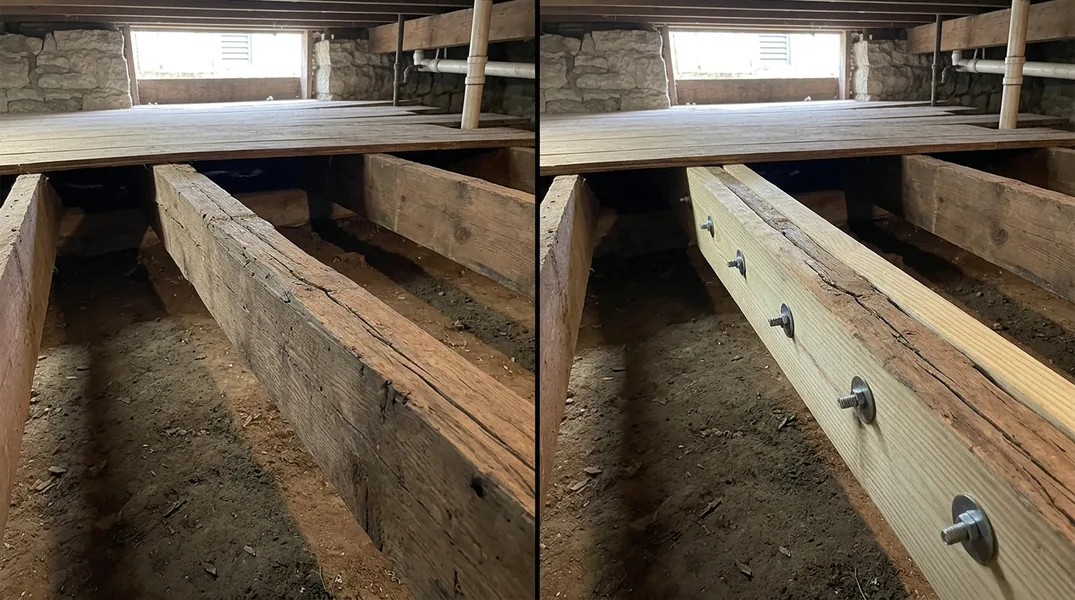
Once rot or damage is confirmed, the repair strategy depends on severity. For moderate damage affecting isolated joists, Floor Joist & Subfloor Repair through a process called sistering is often the most practical solution. Sistering floor joists means installing a new, pressure-treated or solid wood member alongside the damaged joist, fastening them together with bolts and nails to distribute the load between the old and new framing.
This technique works well when the damage is localized to one or two joists and the overall structure hasn't settled significantly. The sister joist runs the full length of the damaged member and is securely bolted at regular intervals, typically every 16 inches. When done correctly, sistering can restore the floor's levelness and stability without requiring the complete removal and replacement of the joist. However, sistering is not appropriate for every situation. If your joists are severely compromised, if multiple joists in a row are affected, or if the subfloor has also rotted away, a full replacement may be necessary.
The decision between sistering and replacement should always be made by a qualified carpenter or structural engineer who can assess the full extent of the damage. At St Louis Carpentry, we perform a thorough inspection to determine which approach will give you the longest-lasting results and the best return on your investment.
Sagging Floor Repair Options: From Minor Adjustments to Major Reconstruction
The repair path for your sagging floor depends on what's causing the sag and how far it has progressed. Minor sags that are purely cosmetic and don't affect doors, windows, or structural integrity might not require immediate action, though they should be monitored. More significant sags that are actively worsening or that are causing doors to stick and cracks to appear in walls demand urgent attention.
If the sag is caused by foundation settlement, you may need Beam Replacement & Load-Bearing Wall Removal work to shore up your home's support system. This could involve installing new support posts, reinforcing or replacing the main beam that runs under your home, or installing adjustable posts to gradually raise the floor back to level. This type of work is complex and requires precise engineering to avoid creating new problems elsewhere in the structure.
For rot-related sags, the process typically begins with moisture control. We identify and eliminate the water source, then address the damaged wood. Depending on the scope, this might mean replacing just a few joists, replacing an entire bay of flooring, or in severe cases, replacing the subfloor and joists across a large area. Modern repairs often incorporate better moisture barriers and ventilation to prevent recurrence.
Some homeowners worry that any floor repair will leave their home uninhabitable during work. In reality, most joist repairs can be completed while you remain in your home, though you may need to avoid the affected area during active construction.
Sagging Floor Repair Cost in St. Louis: What to Budget
The cost of repairing a sagging floor in St. Louis varies dramatically based on the underlying cause, the extent of damage, and the repair method chosen. A simple sistering repair for one or two joists might run between $800 and $2,500, depending on access and joist length. If you need to replace multiple joists or address subfloor damage as well, expect costs to climb to $3,000 to $8,000 or more.
Full structural repairs involving beam replacement or foundation work can easily exceed $10,000, and in homes with extensive rot or pest damage, costs can reach $15,000 to $25,000 or higher. The best way to understand what your specific repair will cost is to request a free estimate from a local contractor who can inspect your home and provide a detailed quote. At St Louis Carpentry, we offer transparent pricing based on the actual scope of work your home needs, with no hidden fees or surprise charges.
It's important to remember that delaying a sagging floor repair typically makes the problem worse and more expensive. A small area of rot that costs $1,500 to fix today might spread to neighboring joists and cost $8,000 to repair in two years. Homeowners who catch the problem early and address it promptly save money and protect their home's structural integrity and resale value.
When to Call a Professional: Floor Joist Repair Near Me
Not every floor sag requires professional intervention, but most do. If you've noticed your floors are sloping, bouncy, or if you see visible cracks in your foundation or basement walls, it's time to call in an expert. Similarly, if you detect a musty smell in your crawl space or basement, or if you've had water intrusion problems, a professional inspection is warranted before the damage spreads.
A qualified carpenter or structural engineer can determine whether your sag is cosmetic, functional, or a sign of serious structural failure. They'll also identify the root cause, which is critical because treating the symptom without addressing the cause means your repair will fail again. At St Louis Carpentry, we've been serving homeowners throughout St. Louis and surrounding areas for years, and we understand the unique challenges that older homes face in this climate.
If you're concerned about sagging floors in your home, don't wait for the problem to worsen. Contact us today at (314) 338-6837 or visit our website to schedule a free estimate. We'll inspect your home thoroughly, explain what we find in plain language, and provide you with honest recommendations and realistic costs so you can make an informed decision about your repair.
Preventing Future Sagging: Maintenance and Moisture Control
Once your floors have been repaired, the best investment you can make is preventing the problem from happening again. The primary enemy of wood framing is moisture. Ensure your crawl space or basement has proper drainage, good ventilation, and a vapor barrier to keep moisture levels in check. Gutters and downspouts should direct water away from your foundation, and any cracks in your basement walls or foundation should be sealed promptly.
Regular inspections of your crawl space or basement are also valuable. Look for signs of water staining, soft wood, mold, or pest activity. Catching problems early means smaller, less expensive repairs. If you have a sump pump, keep it maintained and ensure it's pumping water far enough away from your home. If you notice any new signs of moisture intrusion or wood damage, address them immediately rather than hoping they'll go away on their own.
A well-maintained home lasts longer and costs less to own. By staying proactive about moisture control and structural maintenance, you'll protect your investment and ensure your floors remain solid and level for years to come.
Looking for a professional carpentry contractor in St. Louis? St Louis Carpentry responds fast for all your carpentry needs.
Get a Free QuoteOur services: Wood Rot & Dry Rot Repair · Termite Damage Repair · Floor Joist & Subfloor Repair