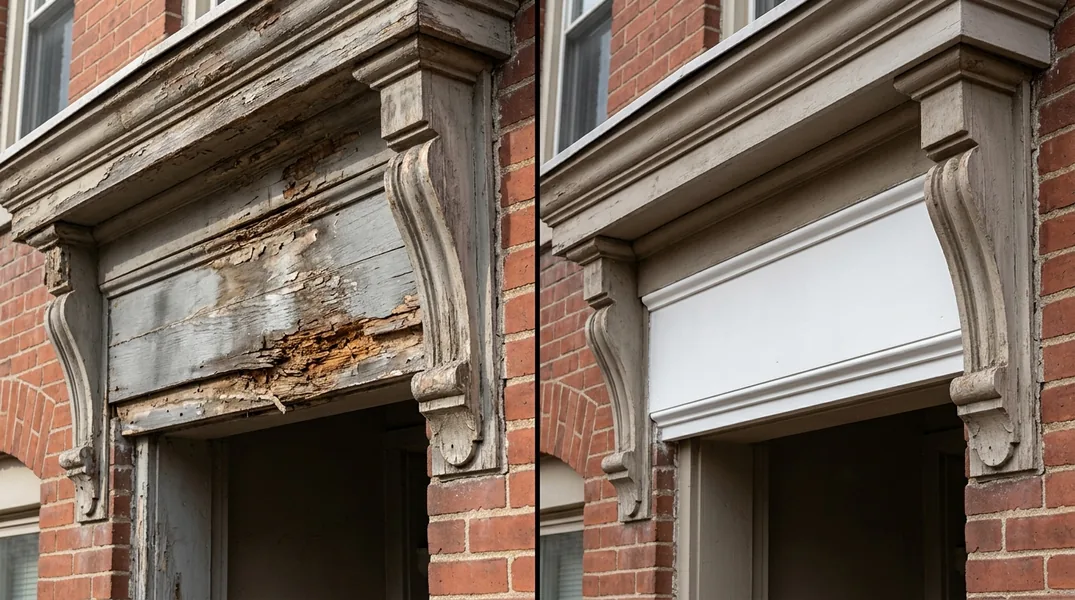
Why St. Louis's Climate Creates the Perfect Storm for Wood Rot
St. Louis sits in a region with one of the most challenging climates for wood preservation in the country. Our summers are hot and humid, with moisture levels that can exceed 70 percent for weeks at a time. Our winters bring freeze-thaw cycles that crack wood fibers and allow water to penetrate deeper into the grain. Spring rains dump inches of water in short periods, and fall leaves clog gutters, directing water straight down exterior walls and onto porches and trim.
This combination of moisture, temperature fluctuation, and seasonal weather patterns creates an ideal breeding ground for wood-destroying fungi. Unlike termites, which require an active food source and visible damage, wood rot fungi can work silently inside wood for months or even years before becoming visible. By the time a homeowner notices soft spots, discoloration, or crumbling wood on a porch or trim board, the damage is often far more extensive than it appears on the surface.
How Porches Become Vulnerable to Rot
Porches are ground zero for wood rot in St. Louis homes. They're exposed to direct rainfall, splash-back from the ground, and constant moisture from the air. Many older homes in the region have porches with wood posts, beams, and flooring that were never treated with modern water-resistant sealants. Even newer porches can develop rot if the original builder used inadequate flashing, poor drainage design, or low-quality wood species.
The structural nature of porch rot makes it particularly dangerous. Unlike rot in a decorative trim board, rot in a porch post or beam compromises the safety of the entire structure. A porch that looks solid from above might have completely soft wood hidden where the post meets the concrete pad or where the rim joist connects to the house. This is why a thorough inspection is essential. Many homeowners don't realize their porch is at risk until someone steps through a soft board or a post begins to lean.
Trim and Fascia: The Hidden Entry Points for Moisture
Exterior trim and fascia boards are often the first casualties of Wood Rot & Dry Rot Repair issues. These thin boards are constantly exposed to weather and are frequently installed with minimal protection. Fascia boards, which run along the roofline and house the gutter system, are especially vulnerable because they're directly in the path of water runoff. If gutters overflow, sag, or pull away from the fascia, water cascades down the board and behind the siding, where it can remain trapped for days or weeks.
Window and door trim presents another common problem. Water can wick up through the wood from the foundation, or it can seep in around caulk joints and paint cracks. Once moisture gets behind the trim, it becomes trapped between the wood and the siding or sheathing, creating the perfect environment for fungal growth. Many homeowners don't inspect their trim closely enough to catch early warning signs like paint bubbling, soft spots, or a musty smell near windows and doors.
The Difference Between Dry Rot and Wet Rot (and Why It Matters)
Homeowners often use the terms 'dry rot' and 'wet rot' interchangeably, but understanding the difference is important for determining the best repair strategy. Wet rot occurs in wood with high moisture content (typically above 50 percent) and requires consistently damp conditions to spread. Dry rot, despite its name, also requires moisture to develop but can spread through wood that feels relatively dry to the touch because it contains internal moisture. Dry rot is particularly aggressive and can spread rapidly through structural wood, making it a serious concern for porch beams and floor joists.
Both types of rot are caused by wood-destroying fungi that break down the cellulose in wood, turning it soft, crumbly, and structurally unsound. The key difference is that dry rot can spread through masonry and even through the air as spores, making it more dangerous in enclosed spaces like crawl spaces and basements. If you notice rot in your porch or trim, it's critical to have it professionally assessed to determine the type and extent of damage. This assessment will guide your repair approach and help prevent the rot from spreading to other parts of your home.
Wood Rot & Dry Rot Repair Near Me: When to Call a Professional
If you've spotted soft wood, discoloration, or crumbling areas on your porch or trim, it's time to call a professional. While small surface rot might seem like a DIY project, wood rot repair is rarely straightforward. Rot typically extends deeper into the wood than you can see, and improper repair can leave hidden damage that continues to spread. A professional inspection uses specialized tools and experience to assess the true extent of the problem and recommend the right solution.
St Louis Carpentry specializes in identifying and repairing wood rot before it threatens your home's structural integrity. Our team can determine whether the damaged wood needs to be replaced, reinforced, or treated, and we'll address the underlying moisture problem to prevent rot from returning. Don't wait until rot compromises your porch's safety or spreads to your home's framing. If you're in Clayton, Webster Groves, or anywhere in the St. Louis area, reach out for a free estimate today by calling (314) 338-6837.
Prevention Strategies to Protect Your Porch and Trim
The best approach to wood rot is prevention. Keep gutters clean and in good repair so water drains away from your home rather than pooling on fascia boards or running down exterior walls. Make sure downspouts extend at least four to six feet from the foundation to direct water away from the soil around your porch. Inspect caulk around windows and doors annually and re-caulk any gaps or cracks. Paint and seal exterior wood every three to five years, paying special attention to porches, trim, and any wood that's in direct contact with the ground or concrete.
Improve drainage around your porch by ensuring the ground slopes away from the foundation and that water doesn't pool under the porch structure. If you have a crawl space beneath your porch, consider installing a vapor barrier and ensuring adequate ventilation to keep moisture levels low. For older homes with existing wood rot or damage, professional Wood Rot & Dry Rot Repair is often the most cost-effective solution because it prevents further deterioration that could lead to expensive structural repairs down the road. When you're ready to address rot or prevent future problems, St Louis Carpentry is here to help with expert guidance and reliable repairs throughout the region.
Looking for a professional carpentry contractor in St. Louis? St Louis Carpentry responds fast for all your carpentry needs.
Get a Free QuoteOur services: Wood Rot & Dry Rot Repair · Termite Damage Repair · Floor Joist & Subfloor Repair